Naval Science CurriculumTo build your technical and leadership foundation, midshipmen take one Naval Science course each semester alongside their standard university major. Taught directly by our assigned unit faculty, these classes count toward your degree and cover essential fleet topics like naval history, leadership ethics, navigation, and weapon systems. |
Weekly Training ScheduleThe military training footprint is structured to fit seamlessly into your normal academic week:
|
Naval Science Course Catalog
One Naval Science course is required each semester, counting toward your degree. Here’s the full four-year sequence.
|
Fall Semester
|
Spring Semester
|
1st Year • 2 CR
NSCI 10101: Introduction to Naval ScienceA comprehensive introductory study of the U.S. Navy and Marine Corps’ history, traditions, organization, officer career paths, and the role of the naval service in supporting national policy. |
1st Year • 2 CR
NSCI 10102: Sea Power & Maritime AffairsU.S. naval and maritime history in the context of world maritime development — the evolution of sea power, enduring U.S. national interests, and the role of naval forces amid geopolitical change. |
2nd Year • 3 CR
NSCI 20201: Leadership & ManagementPrinciples of leadership and management, including management theory, communication, counseling, professional responsibility, and the control and direction of personnel. |
2nd Year • 3 CR
NSCI 20202: NavigationTheory and principles of navigation: dead reckoning, piloting, electronic, inertial, and celestial navigation, along with navigational aids and the nautical rules of the road. |
3rd Year • 3 CR
NSCI 30301: Naval Ship Systems ISteam turbine (nuclear and fossil fuel), gas turbine, and internal combustion marine propulsion plants and shipboard auxiliary systems, with applied thermodynamics and an introduction to ships’ stability. |
3rd Year • 3 CR
NSCI 30302: Naval Ship Systems IITheory and operation of naval weapons systems: types of weapons and fire-control systems, capabilities and limitations, target acquisition and tracking, trajectory principles, and naval ordnance basics. |
4th Year • 3 CR
NSCI 40401: Naval OperationsTheory of ship movements and employment, including communications, sonar-radar search, relative motion, and maneuvering board, plus tactical formations, dispositions, seamanship, and signals. |
4th Year • 3 CR
NSCI 40402: Leadership & EthicsA seminar on practical leadership and management skills specific to the Navy officer, focused on the transition from student to manager, plus naval ethics, naval law, and Navy policies and programs. |
Alt. Fall • 3 CR (Marine Option)
NSCI 40413: Fundamentals of Maneuver WarfareFoundational concepts and history of the USMC as the premier maneuver warfighting organization. Required for First and Second Class Marine Options; alternates yearly with NSCI 40415. |
Alt. Fall • 3 CR (Marine Option)
NSCI 40415: Evolution of WarfareWarfare as an instrument of foreign policy throughout history, examined through great leaders, military organizations, and military theorists. Required for First and Second Class Marine Options; alternates yearly with NSCI 40413. |
Key Summer Training Milestones
Every scholarship midshipman’s college summers are mapped to a deliberate progression — comparing paths from initial training to service assignment.
|
|

|
|
Navy Option Track
|
Marine Option Track
|
New Student IndoctrinationBefore fresh year, candidates head to Great Lakes, IL for NSI. This 2-to-3 week introductory block standardizes basic swim qualifications, military customs, and drill nationwide. |
New Student IndoctrinationPrior to freshman year, Marine Option midshipmen will attend the foundational New Student Indoctrination (NSI) training pipeline at Naval Station Great Lakes, Illinois. |
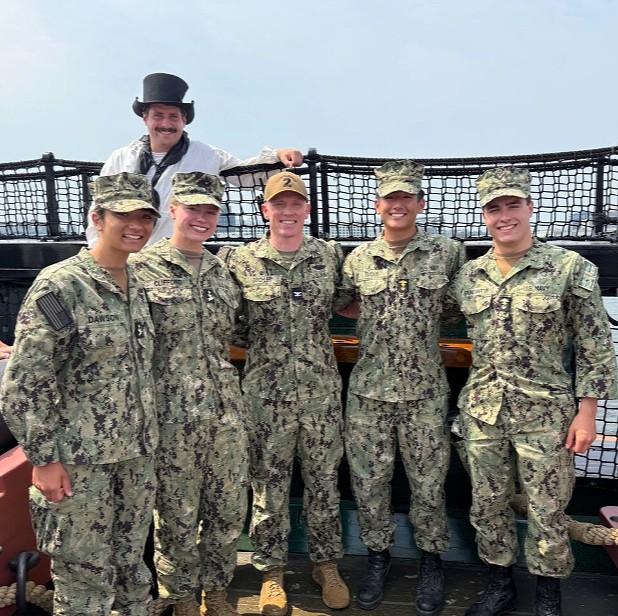
CORTRAMIDFollowing freshman (4/C) year, experience a 4-week immersion in Norfolk, VA or San Diego, CA. Spend one week embedded in each community: Surface, Submarines, Aviation, and Marine Corps. |
CORTRAMID E / WBetween Freshman and Sophomore year, Marine Options attend Career Orientation Training for Midshipmen (CORTRAMID) East in Virginia or West in California for core community exposure. |
2/C CruiseBetween sophomore and junior year, head to sea aboard surface ships or submarines for a firsthand look at enlisted life, work center systems, and fundamental shipboard engineering routine. |
2/C Amphibious CruiseBetween sophomore and junior year, Marine Options shift away from traditional fleet tracking to embed directly with active Marine Corps units or join specialized amphibious warfare surface groups. |
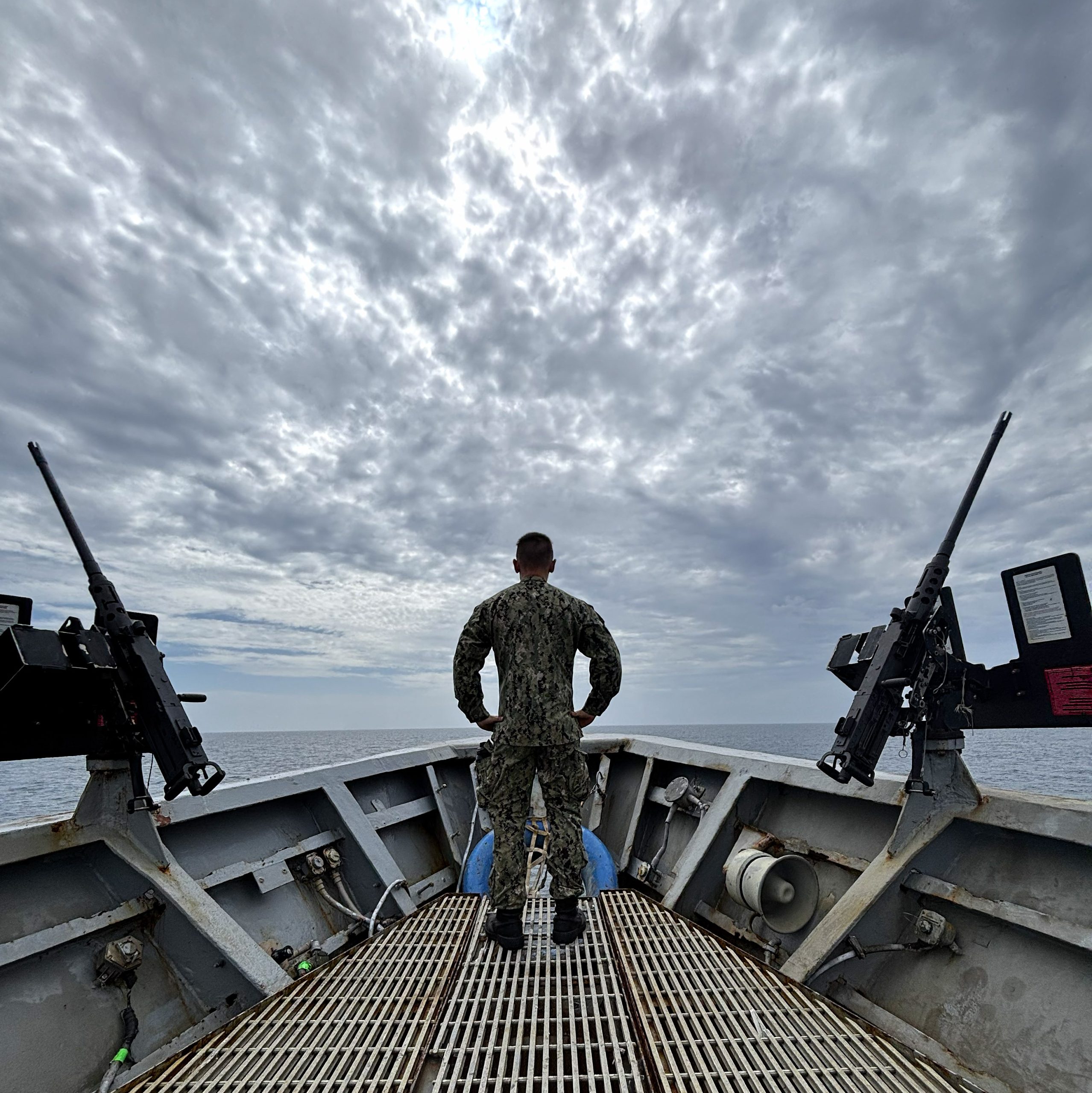
1/C Officer CruiseBetween junior and senior year, get a taste of the true wardroom. Midshipmen pursue at-sea cruises, aviation units, submarine options, or Foreign Exchange Training matching their designator goals. |
Officer Candidate SchoolBetween junior and senior year, Marine Options must attend and successfully complete OCS in Quantico, VA. This rigorous evaluation phase is an absolute, non-waivable requirement for commissioning. |
Upon Commissioning: The Basic School (TBS)
Following graduation, newly commissioned Marine Second Lieutenants report directly to The Basic School (TBS) in Quantico, VA, to master leadership principles across all facets of land combat before selecting and competing for their specialized Military Occupational Specialty (MOS).